How Octus Turned IT Security Into a Customer Benefit and a Strategic Asset

A deep dive into the security philosophy driving one of the fastest-growing platforms in financial intelligence
Table of Contents
- Introduction
- The six-pillar framework
- The AI security challenge
- Making security practical
- Resource efficiency through strategic investment
- Why balanced security investing wins
- Building trust through results
Introduction
In an industry where data breaches cost an average of $6 million per incident and cyberattacks have surged 25%1 year-over-year, one metric stands out at Octus: zero security incidents affecting customer data.
It’s not luck and it’s not about having the biggest security team. Octus is an 850-person financial data, intelligence, and workflow provider, serving the world’s most sophisticated buy-side firms, advisory and law firms, and investment banks. Octus has built its security program around a six-pillar framework designed to eliminate weak links. Information security is a core focus at Octus and a natural part of how we operate, protect data, design systems, develop processes and enable growth, while earning lasting customer trust.
This approach is paying dividends. As the financial services sector reels from supply chain breaches affecting 97% of major U.S. banks and credential theft accounting for 68% of attacks2 , Octus has maintained an unblemished security record while scaling rapidly, integrating acquisitions, and expanding customer-centered solutions.
1 IBM Security, “Cost of a Data Breach Report 2024”
2 KnowBe4’s “Financial Sector Threats Report” (2024/2025)

The six-pillar framework
The six interconnected pillars around which Octus organizes its security program each receive continuous investment and oversight. This architectural approach addresses a common pattern seen in other companies where cyclical security investment drives focus and impact in some areas, while leaving critical gaps in others.
Octus runs a complex multi-cloud environment spanning AWS, Azure, GCP, and Snowflake, which raises the potential for security blind spots. Most security breaches (82% according to Octus internal data) involving cloud data stem from exactly this problem: Organizations don’t know what they have, so they can’t protect it effectively.
Octus takes an active security risk management approach, deploying comprehensive cloud security posture management across every environment. Each asset, configuration, and potential vulnerability is visible in real-time. This “staying-ahead-of-risk” approach prevents the common pattern of accumulating security debt that eventually leads to breaches.
When Octus acquired Sky Road and their Galaxy product in June 2025, this comprehensive visibility enabled rapid integration. While most acquisitions create security blind spots that persist for months or years, the Octus security team had complete transparency into the new environment within weeks of the acquisition. This was an important objective to ensure the appropriate handling of sensitive customer data. The cloud security pillar combines continuous monitoring with proactive threat detection. Cloud-native threat intelligence provides real-time monitoring, while web application firewalls protect customer-facing services from malicious traffic. Infrastructure-as-code practices embed security requirements into technology deployments, preventing misconfigurations at the source rather than discovering them later.
Traditional application security waits until testing or even production to find vulnerabilities. By then, fixes are expensive and risky. Octus takes a proactive approach, “shifting security left,” directly into the development workflow, which can surface issues when they’re cheapest to address.
Automated security scanning happens with every code commit. Developers receive immediate feedback about vulnerabilities in their code or open-source libraries before anything reaches production. It works like spellcheck for security, guiding developers without requiring them to be security experts.
The results are striking: 95% of critical vulnerabilities are caught and fixed before production deployment, based on Octus internal data. This both improves security and accelerates development. Teams ship features faster because they’re built correctly from the start, with no last-minute security scrambles or emergency patches disrupting customers.
Beyond automated scanning, Octus conducts continuous security testing and periodic penetration testing through independent third-party security experts. This outside perspective validates that defenses work against real-world attack techniques, not just theoretical threats.
The vulnerability management program provides systematic tracking of every security issue from identification through remediation. Nothing falls through the cracks. Security improvements are managed systematically (versus ad hoc) with clear accountability and timelines.
The traditional security perimeter (firewalls protecting an internal network) no longer exists. Employees work from coffee shops, home offices, and hotel rooms. Applications live across multiple clouds. The only reliable perimeter is identity combined with continuous monitoring. A cloud access security broker creates this modern perimeter by connecting identity verification with real-time visibility and control over all cloud and web access. It also creates secure pathways to internal applications, replacing traditional VPN access with identity-verified connections that never expose internal systems directly to the internet.
Building this identity-first security model starts with centralized access control. Octus connected over 180 business applications to enterprise single sign-on. Employees authenticate once and get seamless access to everything they need; nothing more, nothing less.
This centralization enables instant access revocation and facilitates a streamlined access review process. When someone leaves the company, their access disappears through one automated action. No more chasing down permissions across dozens of systems. No more discovering that a former employee still has database access six months after departure.
Universal multi-factor authentication (MFA) protects each system. Passwords alone aren’t enough when credential theft drives the majority of attacks in financial services. MFA adds a critical second barrier that prevents most credential-based attacks from succeeding.
Identity management extends beyond employees, as well. Octus invested in secure customer authentication infrastructure, ensuring the thousands of financial professionals accessing the platform daily benefit from the same security rigor. Customer data is only as secure as customer access; both sides require equal attention.
The integration between HR systems, identity platforms, and cloud services automates the entire identity lifecycle. New hires get appropriate access immediately. Role changes trigger automatic access adjustments. Departures initiate instant revocation. Manual processes are error-prone, while automation ensures consistency and speed.
Even sophisticated security architecture can’t prevent every mistake. Humans may occasionally click suspicious links, use weak passwords, or fall for social engineering. Rather than accepting this as inevitable, Octus invested heavily in making mistakes harder and less consequential.
Every corporate device is standardized, encrypted, and centrally managed. Industry-leading endpoint protection provides advanced threat detection and response capabilities. If a device is lost or stolen, remote wipe capabilities ensure data doesn’t fall into the wrong hands.
But the real innovation is in email security. AI-powered protection doesn’t just look for known phishing templates, it understands communication patterns and spots anomalies. An email that looks legitimate to traditional filters might trigger alerts because the AI recognizes subtle inconsistencies.
The numbers tell the story here: Octus blocked over 7,400 email attacks last quarter. That’s 7,400 times an employee didn’t have to make a split-second decision under pressure. In this instance, an ounce of prevention went a long way.
Beyond technology, Octus implemented comprehensive security awareness training for all employees. The Octus security team believes when individuals understand why security matters and how threats work, they make better decisions; they become part of the defense rather than the weakest link.
Furthermore, Octus’ Developer and DevOps teams understand secure coding practices and security tool usage. The security team reviews designs and works with each team, providing peer support and security advocacy. This distributes security expertise throughout the organization rather than concentrating it in a single team.
Strong preventive measures complement our detection and response processes. This ensures that when attacks occur we detect them in time.
Industry statistics in this area are sobering: the average organization takes 204 days to identify a data breach.(3) By then, attackers have had months to move laterally, exfiltrate data, or establish persistent access. Detection time is critical.
Octus has partnered with a premier security operations service provider for 24/7 monitoring capabilities. Expert security analysts monitor the environment continuously, looking for subtle indicators of compromise that automated tools might miss. Building this capability in-house would require hiring dozens of security analysts, which, for an 850-person company, wouldn’t be practical.
The SOC integrates with all security tools, including cloud platforms, identity systems, endpoint protection, and email security, providing comprehensive visibility. Individual tools generate alerts. The SOC connects the dots, seeing patterns that might indicate sophisticated attacks.
When suspicious activity is detected, regardless of day or time, response happens immediately. Within minutes, the incident is contained, evidence is collected, and detailed reporting is ready. This around-the-clock coverage prevents small issues from becoming major breaches.
3 IBM Security, “Cost of a Data Breach Report 2024”
The Octus security and compliance teams work collaboratively to ensure maximum adherence to standards. With this approach, compliance provides independent validation that security controls exist and operate effectively.
The foundation starts with proven frameworks. Octus adopted the NIST Cybersecurity Framework (CSF) and NIST Secure Software Development Framework (SSDF) to structure the security program. These frameworks aren’t just documentation exercises. They provide measurable maturity models across critical security functions.
The CSF guides assessment across five core functions:
- Govern
- Identify
- Protect
- Detect
- Respond
- Recover
The SSDF ensures security is embedded throughout the software development lifecycle, from preparing the organization to responding to vulnerabilities. Quarterly assessments against these frameworks track progress and identify areas for continued investment, ensuring balanced advancement across all security domains.
These frameworks translate technical security work into business language that executives, boards, and customers understand. Rather than discussing individual tools or controls, conversations focus on maturity levels and systematic risk management, concepts that resonate with business stakeholders.
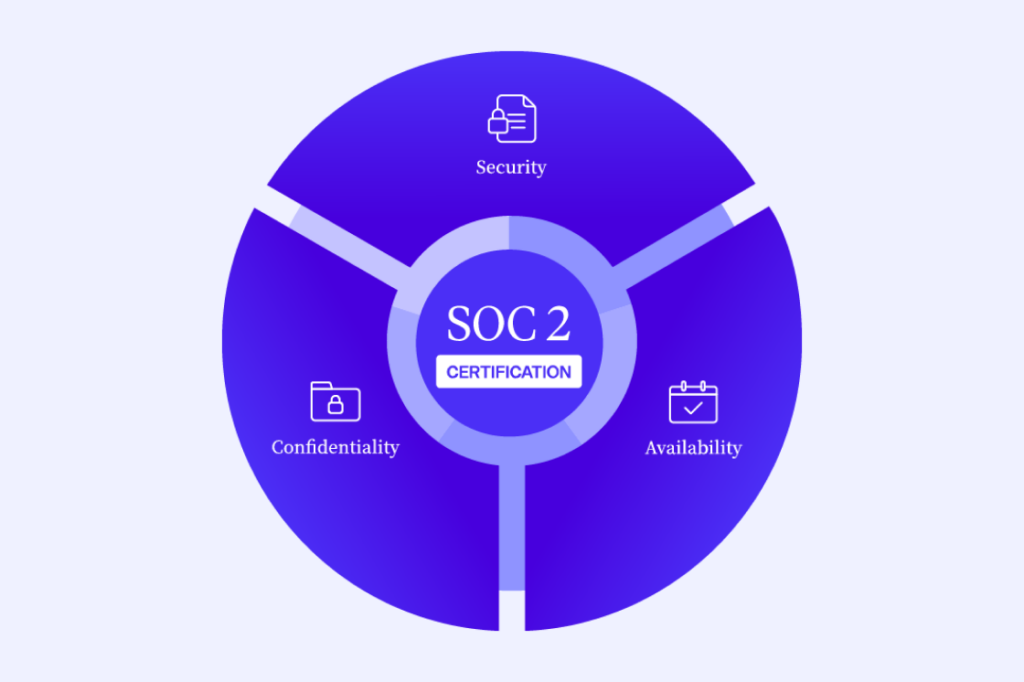
SOC 2 Type II certification for FinDox™ and the CreditAI by Octus™ platforms demonstrate that controls are both documented and operating effectively. Independent auditors validate that Octus does what it claims. This certification continues to expand across all products, driving consistent security standards everywhere.
For customers conducting vendor due diligence, these certifications dramatically accelerate the process. A SOC 2 report addresses most security questions upfront, reducing enterprise sales cycles and building confidence. What used to take months now takes weeks.
Beyond certifications, Octus implemented rigorous vendor risk management. Every third-party provider undergoes a security and compliance assessment. Supply chain risk is critical: 97% of major U.S. banks recently experienced breaches linked to third-party vendors.(4) Every vendor represents an extension of the security program and must meet appropriate standards.
Comprehensive security policies govern everything from access control to incident response. Our policies are living documents that guide daily operations. Regular training ensures employees understand policies and their rationale.
Privacy compliance programs address GDPR, CCPA, and other regulations globally. Data subject rights procedures, breach notification processes, and privacy-by-design principles protect customer information while meeting regulatory requirements. A dedicated Data Privacy Officer oversees the program.
4 SecurityScorecard, “Threat Intelligence Report” (December 2024)

“In an industry content to treat SOC 2 as the finish line, we view it as the foundational starting block. Our security is defined not by a checklist, but by a relentless pursuit of maturity, leveraging the comprehensive, iterative framework of NIST to ensure resilience, not just compliance.”
The AI security challenge
Octus’ competitive advantage lies partly in its AI capabilities across natural language processing, predictive analytics, and machine learning models that deliver unique insights to customers. But AI introduces security challenges that traditional frameworks don’t fully address, so Octus undertook additional security measures.
Training data privacy, model security, bias prevention, and adversarial attacks all require specialized approaches. Octus developed an eight-pillar AI ethics framework covering fairness, transparency, explainability, accountability, data integrity, reliability, security, and safety.
All AI training data undergoes anonymization before use, protecting individual privacy while enabling model improvement. AI development happens in isolated environments with restricted access and comprehensive monitoring, and security isn’t an afterthought; it’s embedded from initial design.
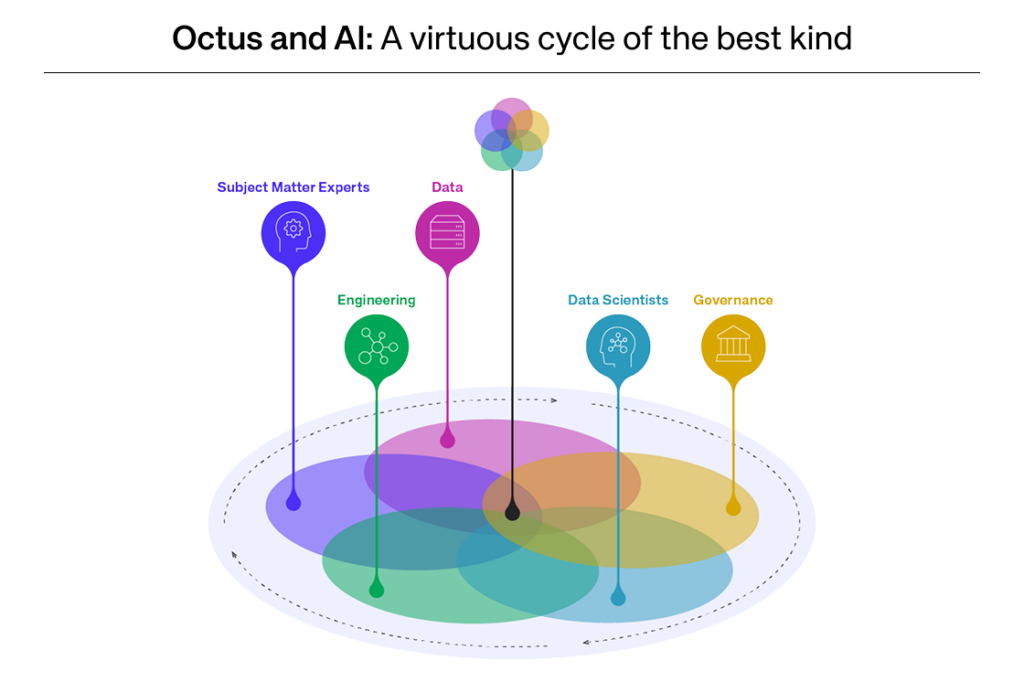
The models themselves represent valuable intellectual property requiring protection. Version control tracks all changes. Adversarial testing validates resilience against attacks designed to manipulate model behavior or extract training data. Continuous monitoring watches for drift, unexpected behavior, or performance degradation.
Human oversight remains central. Subject matter experts validate AI outputs before customer delivery. Explainability features help customers understand how AI-driven insights are generated. Bias monitoring ensures fair outcomes. Governance committees provide strategic oversight.
This approach enables innovation without compromising security. Customers benefit from cutting-edge AI capabilities while their data remains protected through comprehensive controls designed specifically for AI systems.
Making security practical
Octus’ approach to security supports business objectives. This thinking is as important as it is practical. The goal isn’t maximum security. Rather, it’s appropriate security that enables growth while managing risk effectively.
When Octus acquired Sky Road, the security mandate was clear: secure the Galaxy product and achieve SOC 2 compliance within six months. Octus is on track to meet this goal because its security program is mature enough to scale rapidly. The frameworks, tools, and processes extend to new platforms without starting from scratch.
This scalability isn’t accidental. It’s the result of building security into how the business operates rather than treating it as a separate function. When development teams launch new AI features, security is involved from day one in partnership with business teams to solve security problems during design rather than after launch.
The result is faster time to market. When security is built in from the start, there are no last-minute scrambles or launch delays. Teams move faster because they move confidently, knowing security requirements are already addressed.
The approach also enables rapid response to customer needs. When prospective customers ask security questions during due diligence, comprehensive documentation and certifications provide immediate answers. What used to stretch sales cycles now accelerates them. Security becomes a competitive advantage rather than a barrier to overcome.

“Our customers entrust us with their most sensitive financial intelligence and data, and we honor that trust by engineering protection into every layer of our platform. Balanced investment across cloud, identity, applications, and AI isn’t just good practice, it’s how we deliver resilience at scale and ensure every part of our foundation is strong. Our security mission is simple: eliminate weak links before they become risks, and give every customer the confidence that their data is safeguarded by a security program built to lead the industry.”
Resource efficiency through strategic investment
Octus is demonstrating that comprehensive security doesn’t require exorbitant resources. The company runs its security program with four people: a CISO with decades of experience building security programs for high-growth companies; a resource focused on identity and vulnerability management; another handling tools and projects; and an engineer managing investigations and automation.
This lean team achieves enterprise-grade security through strategic decisions. Heavy automation reduces manual work. Partnerships with best-in-class security service providers deliver 24/7 monitoring. The team focuses on high-value activities requiring human judgment, such as strategy, architecture, and risk assessment, while embedded technology handles repetitive tasks.

The financial returns are significant. Industry research shows organizations using AI and automation in security save an average of $1.9 million annually compared to those without.5 Organizations with strong DevSecOps practices save another $1.68 million.6 These aren’t theoretical savings either, they’re measurable improvements in efficiency and effectiveness.
But the real value is cost avoidance. As stated up front, the average data breach in financial services costs $6 million. Zero incidents affecting customer data represents the ROI that matters most. Beyond direct breach costs, security incidents damage reputation, erode customer trust, and complicate sales. Prevention delivers returns that are harder to quantify but even more valuable.
Security also provides competitive advantages. SOC 2 certification used to differentiate organizations. Now it’s table stakes for enterprise sales. But comprehensive security, which looks across certifications plus frameworks plus proven results, turns security from a checkbox into a genuine competitive advantage. Prospective customers choose Octus partly because security questions that slow other vendors have already been addressed.
5 IBM Security, “Cost of a Data Breach Report 2024”
6 Ibid.
Why balanced security investing wins
Hands-on experience shows that most organizations excel in one or two security areas while leaving others vulnerable. For instance, strong cloud security but weak endpoint protection; or sophisticated threat detection but poor access controls; and advanced application security but inadequate vendor management.
We know attackers don’t care about strengths. They exploit weaknesses. A single weak pillar provides entry regardless of how strong other areas are. This is why Octus balances investment across all six pillars covered above.
Octus maintains discipline about this balance despite pressure to focus resources on urgent issues rather than important foundations. When one pillar needs attention, it gets investment, but not at the expense of others. All six require continuous care to maintain our industry strength and advantages.
This balanced approach creates resilience. Multiple overlapping controls ensure that if one fails, others prevent incidents from affecting customers. Defense in depth isn’t just theory, it’s practical protection against the reality that no single control is perfect.
The results validate the approach:
- Zero customer data incidents, while managing 850 employees across global offices
- Successful acquisition integration within months rather than years
- Accelerating enterprise sales cycles through security confidence
- SOC 2 certifications expanding across all products
- Security metrics improving quarter after quarter
But perhaps the most important result is trust. Customers trust Octus with sensitive financial data because they see evidence of comprehensive security. Not just claims or certifications, but demonstrated commitment through balanced investment, continuous improvement, and proven results.
100% of the top 10 global investment banks, CLO managers, asset managers and AmLaw firms are clients of Octus.
Building trust through results
Security at Octus is about being strong everywhere and continuously improving, earning trust through results.
This approach makes security a natural part of how Octus builds and runs the business. It’s an integrated capability that enables growth and is a strategic asset that differentiates the company.
For the 40,000+ financial, legal and advisory professionals who trust Octus, this philosophy delivers what matters most: confidence that their data is protected to the highest standards by a team that takes security seriously and proves it through results.
As the company continues scaling, serving more customers, launching new capabilities, or integrating acquisitions, this balanced approach ensures security keeps pace with growth. The frameworks are established. The tools are in place. The processes are proven. Security won’t constrain the business. It will enable it as a natural part of how we build and run the business.

This publication has been prepared by Octus Intelligence, Inc. or one of its affiliates (collectively, "Octus") and is being provided to the recipient in connection with a subscription to one or more Octus products. Recipient’s use of the Octus platform is subject to Octus Terms of Use or the user agreement pursuant to which the recipient has access to the platform (the “Applicable Terms”). The recipient of this publication may not redistribute or republish any portion of the information contained herein other than with Octus express written consent or in accordance with the Applicable Terms. The information in this publication is for general informational purposes only and should not be construed as legal, investment, accounting or other professional advice on any subject matter or as a substitute for such advice. The recipient of this publication must comply with all applicable laws, including laws regarding the purchase and sale of securities. Octus obtains information from a wide variety of sources, which it believes to be reliable, but Octus does not make any representation, warranty, or certification as to the materiality or public availability of the information in this publication or that such information is accurate, complete, comprehensive or fit for a particular purpose. Recipients must make their own decisions about investment strategies or securities mentioned in this publication. Octus and its officers, directors, partners and employees expressly disclaim all liability relating to or arising from actions taken or not taken based on any or all of the information contained in this publication. © 2026 Octus. All rights reserved. Octus(TM) and the Octus logo are trademarks of Octus Intelligence, Inc.